
Jesus Christ Art, Quick Historical Summary
Updated: Jul 8
Jesus Christ Art, Quick Historical Summary
Jesus Christ Art. Jesus Christ has been one of the most depicted figures in Western and Eastern art for nearly 2,000 years. His portrayal evolved from symbolic and varied early forms to a more standardized iconic image, reflecting theological shifts, cultural influences, and artistic styles. en.wikipedia.org
Early Christian Art (1st–5th centuries)
Aniconism and symbolism first: Early Christians, influenced by Jewish prohibitions on graven images and fear of persecution, avoided direct depictions of Jesus. They used symbols like the ichthys (fish), Chi-Rho, or the Good Shepherd (a young, beardless figure with a lamb, borrowed from pagan motifs). artandobject.com
Earliest known images (mid-3rd century): Appear in Roman catacombs (e.g., Catacomb of Domitilla, ~200–250 CE) and the Dura-Europos house church in Syria (~235 CE). Jesus is typically shown as a young, short-haired, beardless man in a Roman-style tunic, performing miracles (e.g., healing the paralytic or raising Lazarus) or as a philosopher-teacher with a scroll. He often resembles a generic Roman or Hellenistic youth rather than a distinct individual.
Crucifixion scenes were rare or absent early on (focus was on resurrection and miracles).
Late Antique / Byzantine Era (4th–8th centuries)
After Constantine legalised Christianity (Edict of Milan, 313 CE), art became public and monumental (mosaics, sarcophagi).
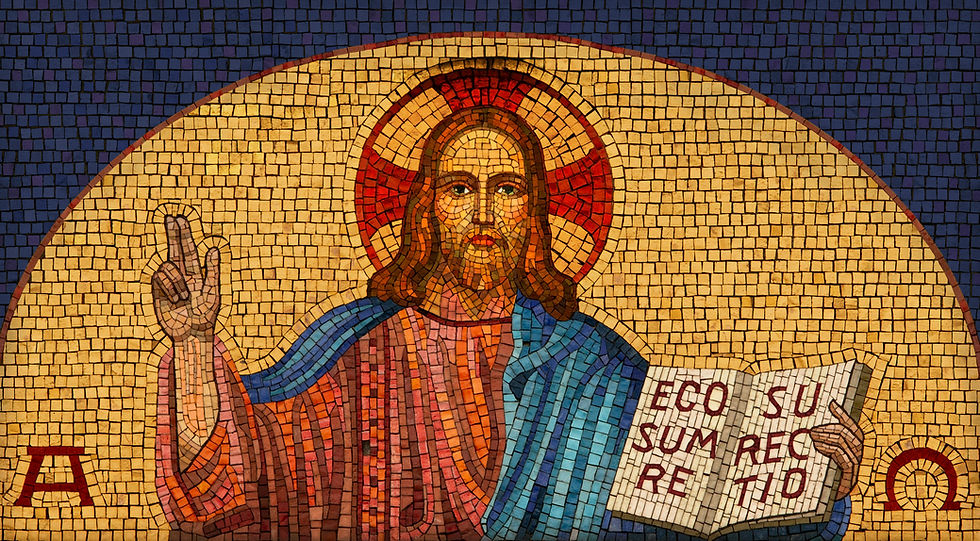
The bearded, long-haired Jesus emerged around the late 4th century and was standardised by the 6th century, especially in the East. This image drew from depictions of philosophers, Zeus/Jupiter, or kings, emphasising divinity, wisdom, and authority. en.wikipedia.org
Key example: The Christ Pantocrator ("Ruler of All") icon from St. Catherine’s Monastery, Sinai (6th century) — a frontal, majestic figure with halo, one of the most enduring types in Eastern Orthodoxy. medium.com
Medieval Period (5th–14th centuries)
Byzantine icons dominated the East: Stylized, symbolic, non-realistic images meant for veneration (not idolatry). The Second Council of Nicaea (787) affirmed icons after the Iconoclasm controversy.
In the West: More varied, often with Romanesque or Gothic styles. Jesus appeared in manuscripts, frescoes, and sculptures. Emphasis on suffering (crucifixes) grew, especially post-1000 CE. Clean-shaven Jesus persisted in the West longer.
Renaissance and Beyond (14th–17th centuries)
Artists humanised Jesus: More naturalistic, emotional, and anatomically realistic (e.g., Leonardo da Vinci’s Last Supper, Michelangelo’s works). The Northern Renaissance added intense suffering in crucifixion scenes.
Baroque era amplified drama and emotion (Caravaggio’s chiaroscuro, dramatic lighting).
Later Developments
Jesus’ image is adapted to local cultures worldwide (e.g., African, Asian, or Latin American portrayals in modern missionary art).
The "Western" long-haired, bearded, fair-skinned Jesus became dominant globally through European influence, though it’s a cultural construct rather than historical accuracy. sc.edu
Jesus Christ Art. Overall trend:
From symbolic/anonymous (early) → majestic/divine (Byzantine) → human/suffering (Medieval/Renaissance) → culturally diverse interpretations today. The core bearded, robed figure with a halo has remained remarkably stable since the 6th century in much of Christian art.
Jesus Christ Art. This is a very high-level overview—art history books or museum visits offer far more depth and specific masterpieces!
Recommended Christian Resources





Comments