
Christianity vs Catholicism: What Is the Difference?
Christianity vs Catholicism is not a contest between two religions. Catholicism is the largest branch of Christianity, so every Catholic is a Christian. The real differences are between Catholic and Protestant teaching on authority, salvation, the sacraments and the role of Mary and the saints, while both share the Nicene Creed, the Trinity and faith in Jesus Christ.
Christianity vs Catholicism is a question many people ask when they hear someone say "I'm Catholic, not Christian" or "I'm a Christian, not a Catholic". The honest answer is that the two words are not opposites. Catholicism is one of the main branches of Christianity, alongside Orthodoxy and the many Protestant churches.
This guide sets out what Catholics and other Christians share, where they genuinely differ, and how to talk about those differences with respect. It uses the NIV for Scripture and points to the Catholic Catechism and Pew Research so you can check what each side actually teaches.
You do not need any background in theology to follow it. If you are new to the faith, our guide to what Christianity is is a good place to begin.
Contents
Is Catholicism part of Christianity?
What do Catholics and other Christians believe in common?
How do Catholics and Protestants differ on authority?
How do they differ on salvation?
What are the sacraments, and where do churches differ?
What is the role of Mary, the saints and purgatory?
How do the pope, priests and church structure differ?
Do Catholics and Protestants read the same Bible?
How common is Catholicism in the UK?
How should Christians talk about these differences?
Where does Scripture speak clearly, and where do traditions differ?
A short prayer for Christian unity
Frequently asked questions
Is Catholicism part of Christianity?
Yes. Catholics believe in the Trinity, in Jesus Christ as God the Son, in his death and resurrection, and in the Bible as God's word. That puts them firmly inside the Christian faith, and the Catholic Church is the largest Christian body in the world.
The Vatican's statistics office reports that the global Catholic population rose from about 1.39 billion in 2022 to 1.406 billion in 2023 (Vatican News, March 2025). That is a great many people who would simply call themselves Christians.
The confusion usually comes from everyday speech. In some places "Christian" has come to mean Protestant, and "Catholic" is used as a separate label. In church history, the Catholic Church was the first large Western church, and the Protestant churches grew out of the Reformation from the 1500s.
A note of honesty: some Protestants disagree strongly with Catholic teaching on salvation and ask whether it matches the Bible. Even so, the historic position of the major churches is that Catholics are Christians who belong to Christ. This post aims to describe each view fairly, not to argue anyone out of their church.

What do Catholics and other Christians believe in common?
Before the differences, the common ground is worth seeing. It is larger than most people expect.
One God in three persons: Father, Son and Holy Spirit
Jesus Christ as fully God and fully human
Jesus' death on the cross for our sins and his bodily resurrection
The Bible as inspired Scripture
The Nicene Creed, which Catholics, Orthodox and most Protestants affirm
Baptism as the way into the Christian life
Paul describes this shared life in Ephesians 4:4-6 (NIV):
"There is one body and one Spirit, just as you were called to one hope when you were called; one Lord, one faith, one baptism; one God and Father of all, who is over all and through all and in all."
If you want to explore why Christians say Jesus is God, read Is Jesus really God?.
How do Catholics and Protestants differ on authority?
This is the root of most other differences. Protestants generally hold to sola scriptura, Latin for "Scripture alone": the Bible is the final authority for belief and practice. Catholics hold that God's word comes through Scripture and Sacred Tradition together, and that the Church's teaching office, called the Magisterium, interprets both.
The Catechism of the Catholic Church says: "Both Scripture and Tradition must be accepted and honoured with equal sentiments of devotion and reverence" (paragraph 82, read it on the Vatican website).
Protestants often point to 2 Timothy 3:16-17 (NIV):
"All Scripture is God-breathed and is useful for teaching, rebuking, correcting and training in righteousness, so that the servant of God may be thoroughly equipped for every good work."
Catholics often point to 2 Thessalonians 2:15 (NIV), where Paul asks believers to hold to teaching passed on by word of mouth as well as by letter:
"So then, brothers and sisters, stand firm and hold fast to the teachings we passed on to you, whether by word of mouth or by letter."
Both sides honour both verses. The disagreement is over whether church tradition stands beside Scripture or beneath it. Pew Research found in 2017 that 75% of US Catholics said Christians need church teaching and tradition as well as the Bible, while 46% of US Protestants said the Bible alone is the sole source of religious authority (Pew Research Center).

How do they differ on salvation?
Both Catholics and Protestants teach that salvation is a gift of God's grace through Jesus Christ. They differ on how faith and good works relate to being made right with God, which theologians call justification.
Protestants following Martin Luther stress that a person is justified by faith, not by earning it. Romans 3:28 (NIV) says:
"For we maintain that a person is justified by faith apart from the works of the law."
Catholic teaching says grace and faith come first, and that faith is a living faith that shows itself in love and good deeds. Catholics often cite James 2:24 (NIV):
"You see that a person is considered righteous by what they do and not by faith alone."
Many Protestants answer that James describes the proof of faith, not its price. In 1999 the Catholic Church and the Lutheran World Federation signed a Joint Declaration on the Doctrine of Justification, stating that they share a common understanding of the basic truths, while some differences of emphasis remain.
In practice the line is blurry. Pew found that 81% of US Catholics said both good deeds and faith are needed to get into heaven, but so did majorities of several Protestant groups, and only 46% of US Protestants chose "faith alone". For more, see what salvation means and what faith is.
What are the sacraments, and where do churches differ?
Catholics celebrate seven sacraments: baptism, confirmation, the Eucharist, reconciliation (confession), anointing of the sick, marriage and holy orders. Most Protestant churches recognise two: baptism and the Lord's Supper, also called communion.
The biggest difference concerns communion. Catholics teach that the bread and wine become the body and blood of Christ, a doctrine called transubstantiation. Protestant views range from a real spiritual presence to a memorial of Christ's sacrifice. All look back to Luke 22:19 (NIV):
"And he took bread, gave thanks and broke it, and gave it to them, saying, 'This is my body given for you; do this in remembrance of me.'"
Confession is another difference. Catholics confess sins to a priest who gives absolution, and they point to Jesus' words in John 20:23. Most Protestants confess directly to God, pointing to 1 Timothy 2:5 (NIV):
"For there is one God and one mediator between God and mankind, the man Christ Jesus."
What is the role of Mary, the saints and purgatory?
Catholics honour Mary as the mother of God and ask for her prayers, much as they would ask a friend to pray for them. They do the same with the saints. The Church teaches that this is veneration, not worship, which belongs to God alone.
Most Protestants do not pray to Mary or the saints, since they see Jesus as the only mediator. They do honour Mary as the mother of Jesus, and many value the examples of the saints.
Purgatory is the Catholic teaching that those who die in God's friendship are cleansed before entering heaven. Pew found that about seven in ten US Catholics believe in it, while most white evangelical and white mainline Protestants do not.
How do the pope, priests and church structure differ?
The Catholic Church is led by the pope, the bishop of Rome, whom Catholics see as the successor of the apostle Peter. They point to Matthew 16:18 (NIV):
"And I tell you that you are Peter, and on this rock I will build my church, and the gates of Hades will not overcome it."
Protestants generally read "this rock" as Peter's confession of faith or as Christ himself, and do not accept papal authority. Protestant churches govern themselves in different ways, through elders, bishops, assemblies or the local congregation.
Catholic priests are ordained and, in the Latin Church, are normally celibate. Most Protestant pastors may marry, and many Protestant churches ordain women, which the Catholic Church does not.
Do Catholics and Protestants read the same Bible?
Mostly, yes. Catholic Bibles contain 73 books and Protestant Bibles 66. The seven extra Old Testament books, such as Tobit, Judith, Wisdom and Sirach, together with extra sections of Esther and Daniel, are called the deuterocanonical books.
The New Testament is the same on both sides. See the full list in Books of the Bible: all 66 books in order, and if you are new to reading it, try how to start reading the Bible.
How common is Catholicism in the UK?
In the 2021 Census, 46.2% of people in England and Wales (27.5 million) described themselves as Christian, down from 59.3% in 2011 (Office for National Statistics). Catholics are part of that total, alongside Anglicans and other denominations.
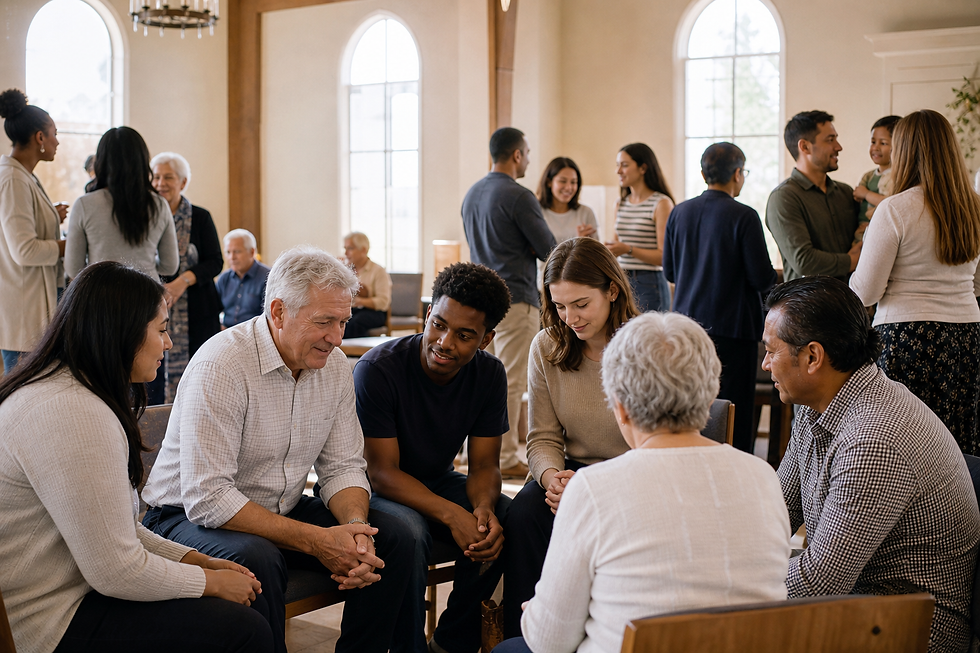
In many towns, Catholic and Protestant churches work side by side on food banks, school life and community events. Our guide to trusted Christian charities shows how believers from different traditions serve together.
How should Christians talk about these differences?
Jesus prayed for his followers in John 17:21 (NIV):
"that all of them may be one, Father, just as you are in me and I am in you."
That prayer does not ask us to pretend the differences are small. It asks us to speak truthfully and kindly, to listen before we answer, and to remember that the person across the table is loved by Christ. Ask what your friend actually believes, rather than what you assume their church teaches.
Where does Scripture speak clearly, and where do traditions differ?
Scripture speaks clearly that Jesus is Lord, that salvation is God's gift, and that believers are called to love God and their neighbour. On questions such as the pope's role, purgatory or the number of sacraments, faithful Christians read the same Bible and reach different conclusions. Church traditions, Catholic and Protestant, shape how those verses are read.
If you are deciding which church to join, visit, ask questions and read the primary sources for yourself. The Catechism is online, and so are the historic Protestant confessions. You may also find our comparison of Christianity and Judaism helpful for seeing how Christian faith grew from its roots.
A short prayer for Christian unity
Lord Jesus Christ, you prayed that your people would be one. Forgive us for the times we have spoken without love. Teach us to hold the truth with humility, to listen with patience, and to serve those in need together. Draw all who trust in you closer to you, and so closer to one another. Amen.
Key Takeaways
Catholicism is a branch of Christianity, and Catholics are Christians.
Catholics and Protestants share the Trinity, the deity of Christ, his resurrection and the Nicene Creed.
The main differences are authority (Scripture alone or Scripture and Tradition), how faith and works relate in salvation, the sacraments, Mary and the saints, and the role of the pope.
Catholic Bibles have 73 books and Protestant Bibles 66.
Surveys show many believers hold views that cross the traditional lines, so ask people what they believe rather than assuming.
Speak with honesty and kindness, as Jesus prayed for his followers to be one.
Frequently asked questions
Is Catholicism the same as Christianity?
No, but Catholicism is part of Christianity. It is the largest branch of the Christian faith, alongside Orthodox and Protestant churches. All three trace their faith to Jesus Christ and the apostles.
Are Catholics Christians?
Yes. Catholics believe in the Trinity, in Jesus as Lord and Saviour, and in his resurrection, and they recite the Nicene Creed. Some Protestants dispute parts of Catholic teaching on salvation, but the major churches regard Catholics as Christians.
What is the main difference between Catholics and Protestants?
The root difference is authority. Protestants hold to Scripture alone, while Catholics hold to Scripture and Sacred Tradition interpreted by the Church. Most other differences, such as the pope, the sacraments and purgatory, follow from that.
Do Catholics worship Mary?
No. The Catholic Church teaches that worship belongs to God alone. Catholics honour Mary as the mother of Jesus and ask for her prayers, in the way they might ask a friend to pray for them.
Is the Catholic Bible different from the Protestant Bible?
Slightly. Catholic Bibles include 73 books, with seven extra Old Testament books and additions to Esther and Daniel. The New Testament is the same in both.
Do Catholics and Protestants believe in the same Jesus?
Yes, on the central claims. Both teach that Jesus is God the Son, born of Mary, crucified for our sins and raised on the third day. They differ more on how his work is received and passed on through the Church.
Scripture quotations are from the Holy Bible, New International Version (NIV), copyright Biblica, Inc. Used by permission. All rights reserved worldwide.
Reviewed on 22 October 2026. For this guide we checked the NIV quotations against the text on Bible Gateway and read the Catechism section named above, the Pew Research Center report on Protestants and the Reformation, the Vatican News report on the Pontifical Yearbook and the ONS Census 2021 bulletin.
Keep reading: Is Jesus really God?, what salvation means and what Christianity is.


Comments